
Choosing the right number of generators for a large construction site or industrial project depends on more than just the size of the site. The key factor is the actual power demand of all machinery and equipment operating on-site.
Choosing an unsuitable generator capacity or number of units can lead to voltage drops, unexpected shutdowns, work disruptions, or unnecessary rental costs from using more equipment than required.
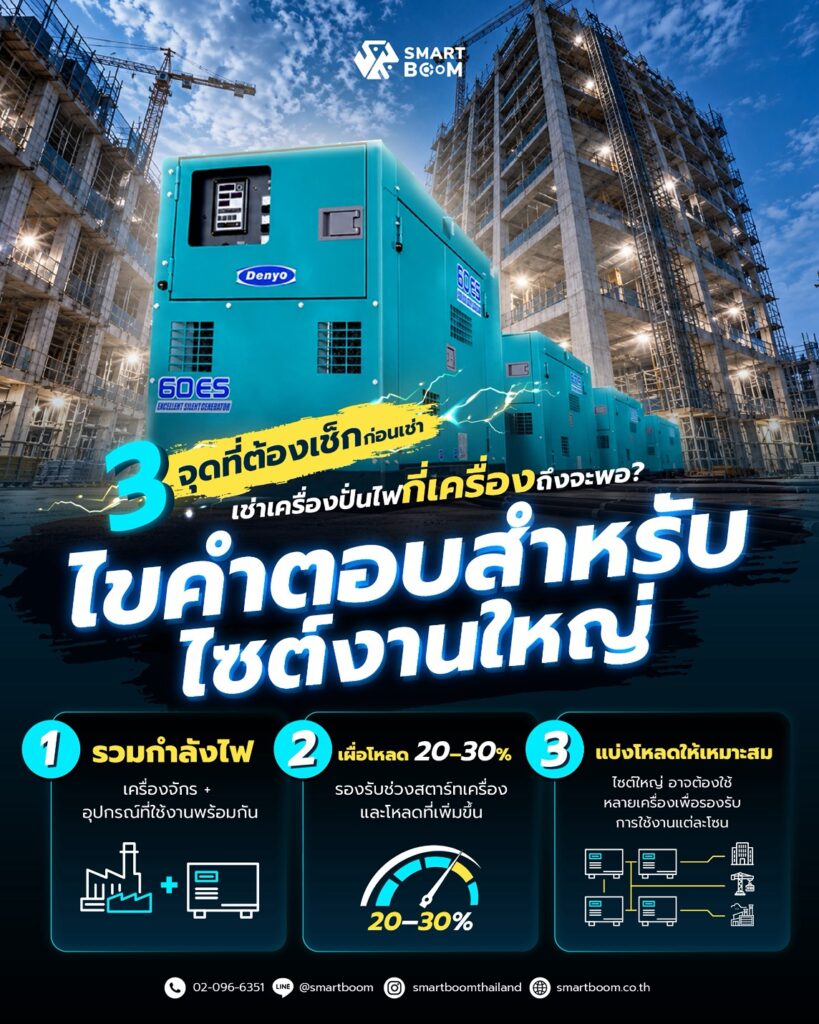
3 Key Factors to Consider When Assessing Power Requirements Before Renting a Generator
1.Calculate the Total Load of All Equipment:
Survey and compile the power ratings (kW or kVA) of all tools, welding machines, water pumps, lighting systems, and machinery that will operate simultaneously on-site to determine the total power demand.
2. Allow a 20–30% Safety Factor for Starting Loads:
Equipment with motors or inductive loads, such as air compressors and water pumps, can require significantly higher starting current than during normal operation. Allowing an additional 20–30% power capacity helps reduce the risk of sudden generator shutdowns when multiple machines start simultaneously.
3.Plan Power Distribution by Zone:
For sites with multiple work areas, relying on a single large generator and running long power cables can result in voltage drops. Distributing generators across different zones can provide more stable power, reduce fuel costs, and allow operations to continue even when a generator in one area needs to be temporarily shut down for maintenance.
Handle Heavy-Duty Operations with DENYO Soundproof Generators Global-Standard Performance
Choosing a reliable generator brand is essential for maintaining continuous 24-hour operations. DENYO generators are designed to handle demanding job-site conditions and challenging weather:
- Highly Stable 3-Phase Power Supply: Delivers stable and consistent power, helping protect control systems and machinery motors while reducing the risk of power fluctuations.
- Soundproof Enclosure: Operates quietly to reduce noise pollution, making it suitable for use near residential areas, buildings, or in confined spaces.
- Built to Withstand Various Weather Conditions: The robust enclosure helps protect against rain and dust, allowing outdoor operations to continue smoothly in both intense sunlight and heavy rain.