
In an increasingly competitive construction, MEP (Mechanical, Electrical, Plumbing), and engineering landscape, three factors dictate project profitability: time, cost, and safety.
Historically, scaffolding was the default choice for high-reach tasks. However, as modern structural safety standards tighten and labor costs rise, traditional scaffolding introduces liabilities. Today, high-performance Electric Scissor Lifts (colloquially known as X-Lifts in Thailand) have become the premier vertical access solution for leading contractors and project engineers nationwide.
Whether optimizing your next project timeline or preparing a cost-benefit analysis for executive procurement, this comprehensive breakdown details the technical advantages, engineering features, and operational efficiencies that make Smartboom the trusted rental partner.
Defining the Scissor Lift: Engineering & Stability
An electric scissor lift is a specialized mobile elevating work platform (MEWP) engineered to lift personnel, tools, and heavy materials strictly in a vertical plane.
Unlike other aerial lifts, its signature cross-braced pantograph mechanism—powered by hydraulic cylinders and electric motors—delivers exceptional structural rigidity. This design provides a larger platform area and significantly higher load capacities than boom lifts, ensuring a stable, rock-solid workspace at elevated heights.
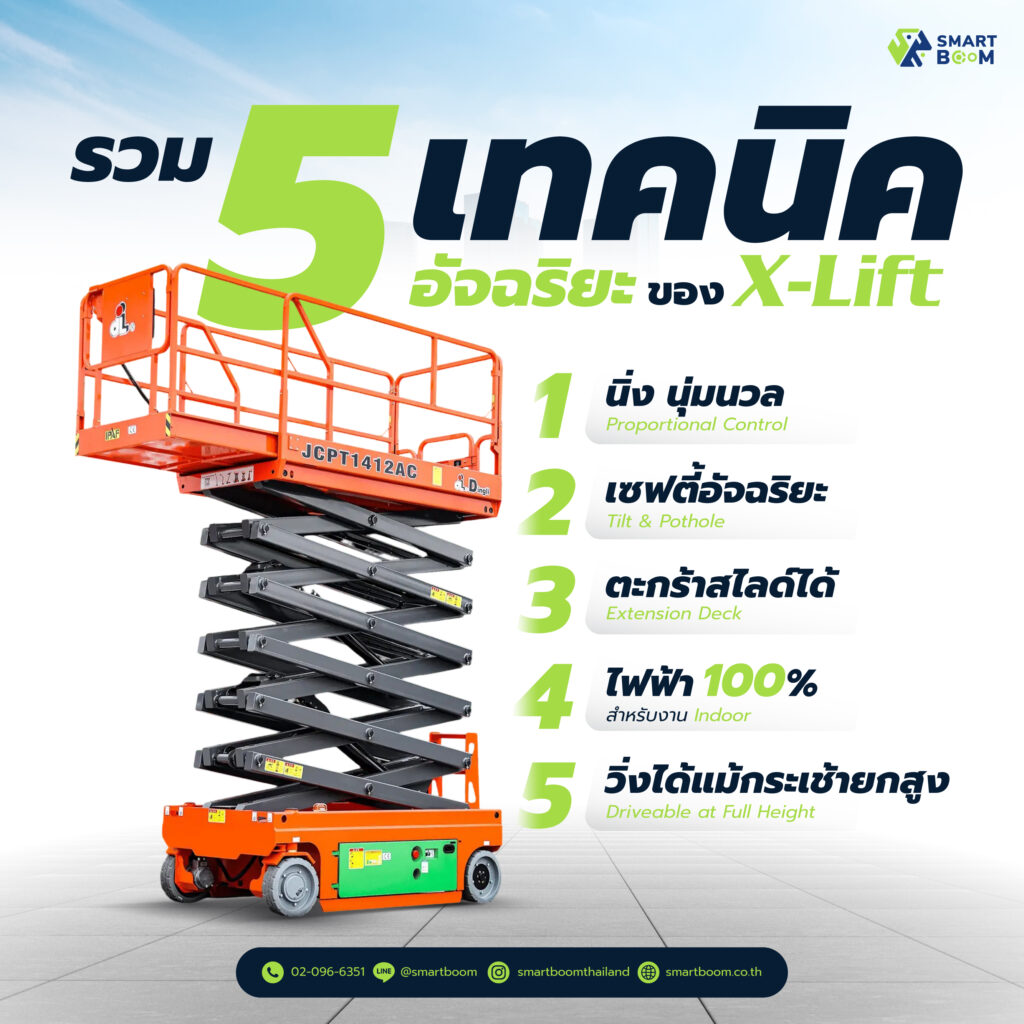
5 Core Innovations of Smartboom’s Premium Lift Fleet
Smartboom exclusively supplies world-class fleets, including industry leaders like Dingli. These units are not mere lifting machines; they are highly engineered mobile platforms designed to protect field crews and accelerate project velocity:
1. Proportional Control System (Smooth Vertical Mechanics)
Equipped with advanced electronic controllers, our lifts feature micro-proportional hydraulic valves. This ensures vertical extension and retraction are completely seamless, eliminating abrupt jerks, sudden drops, or platform sway. Technicians can operate heavy drills, handle delicate wiring, and install piping with the same confidence as working on solid ground.
2. Intelligent Safety Sensors (Tilt & Pothole Protection)
-
Tilt Sensor: The onboard control module monitors ground inclination in real time. If the jobsite slope exceeds safe operational tolerances, the system triggers an audible alarm and automatically restricts further vertical extension to prevent tipping hazards.
-
Pothole Protection: Heavy-duty mechanical steel plates deploy automatically underneath the chassis as the platform elevates. These plates minimize ground clearance, preventing the machine from tipping over if a wheel inadvertently rolls into a jobsite trench or floor opening—a feature highly rated by site Safety Health Environment (SHE) officers.
3. Roll-out Platform Extension Deck
While standard scissor lift platforms offer ample space, our units feature an integrated roll-out extension deck that slides outward by 0.9 to 1.2 meters. This mechanism allows crews to outreach overhead obstacles or access deep recessed areas without repositioning the entire chassis, while providing extra storage for heavy payloads like fire protection pipes, conduit bundles, or solar panels.
4. 100% Zero-Emission Electric Drivetrain (Optimized for Indoor Use)
Powered by industrial deep-cycle battery packs, our electric lifts offer three primary indoor advantages:
-
Zero Emissions: No exhaust fumes or toxic particulate matter, making them mandatory for enclosed spaces, cleanrooms, shopping malls, and food-grade manufacturing plants.
-
Acoustic Comfort (Low Noise): Ultra-quiet motor operation allows projects to run overnight or during business hours without violating local noise ordinances.
-
Non-Marking Tires: Equipped with specialized non-marking white rubber compound tires that protect expensive epoxy, polished concrete, or premium commercial tiling from scuffs and tire burns.
5. Full-Height Drive Functionality
Unlike traditional scaffolding that requires complete teardown to move, operators can drive, steer, and reposition the scissor lift while the platform is fully elevated. This allows technicians to perform continuous, non-stop installations—such as long-run HVAC ductwork, high-bay lighting grids, or warehouse cable trays—drastically reducing downtime.
Pre-Rental Checklist: 5 Critical Factors for Site Readiness
To maximize rental ROI and prevent costly onsite delays, project managers and engineers should audit these five site parameters before deployment:
1. Jobsite Surface Conditions
Electric scissor lifts require solid, level, and prepared surfaces to operate safely. Ideal conditions include cured concrete, asphalt, level tarmac, or finished epoxy. If your jobsite consists of uncompacted soil, mud, loose gravel, or sand, a standard electric lift will trigger safety interlocks via its tilt sensor. For rough terrain, specialized four-wheel-drive diesel or rough-terrain models must be specified.
2. Entryway and Overhead Clearances
A common oversight is failing to measure the structural choke points of a facility before delivery. Always cross-reference the lift’s stowed dimensions (total width and transport height with guardrails folded) against your site’s physical access points, including freight elevator doors, warehouse roll-up gates, and low overhead utility lines.
3. On-Site Power Infrastructure for Charging
Our 100% electric scissor lifts require a standard 220V power source for overnight charging (typically 6 to 8 hours) to secure a full, high-intensity daytime shift. Ensure your jobsite has a functional temporary power distribution board or designated charging stations equipped with proper surge protection before the equipment arrives.
4. Structural Floor Load Limits
For indoor installations on raised slabs, mezzanines, or multi-story structures, you must verify the floor’s maximum permissible load capacity (measured in kg/m²). Compare this limit against the Gross Vehicle Weight (GVW) of the scissor lift model to guarantee structural integrity and prevent concrete cracking or structural deflection.
5. Regulatory Compliance and Safety Certifications (ปจ.1)
Tier-1 infrastructure projects and large-scale industrial plants enforce strict safety enforcement. Before mobilization, verify that your equipment supplier provides valid Por-Jor 1 (ปจ.1) safety inspection certificates alongside the machine’s logbook and operational manuals. This ensures immediate approval of your Permit to Work (PTW) during safety audits, preventing costly regulatory standstills.